%20(2).png)


Local Activities
Phase2
Our Local Activities Phase 2 aim is to enable at least 20 youths from each partner country to transform the knowledge and skills they have gained on sustainable energy into practical actions at the local level and to raise community awareness.
Virtual activities
YLGET Webinar – Skills & Mindset for a Green Energy Transition
On 25 March 2026, the YLGET partnership organized an online webinar focused on energy-independent communities and the role of young people in the green energy transition. The session brought together participants from Romania, Bulgaria, and Türkiye, creating a space for learning, exchange, and active dialogue.
The webinar featured Bozhil Kondev, expert in energy, climate change, and sustainability, who delivered an engaging and insightful presentation on community-driven approaches to sustainable energy.
During the session, the speaker shared concrete examples of local and national initiatives in Bulgaria, highlighting how volunteers, youth groups, and local communities are actively contributing to the transition towards sustainable energy systems. These examples illustrated the importance of collective action, civic engagement, and local leadership in addressing climate challenges.
Particular attention was given to inspiring practices from Burgas and Gabrovo, where local communities have taken proactive steps toward energy independence. In the case of Gabrovo Municipality, citizens, small companies, and local authorities have collaborated by pooling resources such as funding, land, knowledge, and time to develop an energy community. This collective effort demonstrates how shared responsibility and cooperation can lead to innovative and sustainable energy solutions at local level.


The webinar also included contributions from project partners, who presented youth-led advocacy initiatives, such as the “Thirsty for Solutions” campaign, showcasing how young people can raise awareness, influence public discourse, and promote sustainable practices within their communities.
Participants were actively involved throughout the session, contributing with questions, reflections, and interventions. Their engagement highlighted the growing interest and readiness of young people to take part in shaping a more sustainable future.
The webinar reinforced the core objective of the YLGET project: to empower young people with the knowledge, skills, and motivation needed to become active contributors and leaders in the green energy transition.
Local Activities in Romania
From Idea to Action – Youth Workshop
On March 30, over 30 students from the Theological High School Târgu Jiu and the “Traian Vuia” Technical High School Târgu Jiu participated in the workshop “From Idea to Action”, facilitated by Asociatia Edulifelong at Zbor Hub, a space dedicated to youth engagement, collaboration, and innovation.
The session focused on climate action, sustainability, and youth advocacy, and was connected to the European Climate Pact / Pact2School Challenge as well as the YLGET – Youth Leading Green Energy Transition project. The workshop combined awareness-raising with a practical, project-based approach, encouraging students to move from understanding environmental challenges to proposing concrete solutions.
Following a short introduction and an inspiring case study, participants worked in teams as part of the “Convince the Mayor!” simulation. They identified key issues affecting their local community and developed advocacy-oriented solutions.


The proposed ideas addressed a range of relevant topics, including the lack of urban green spaces, the need to improve air quality and comfort in classrooms, strengthening collaboration between schools and NGOs, promoting sustainable transport options, and tackling the impact of fast fashion through textile recycling and responsible consumption.
The workshop provided students with an opportunity to develop critical thinking, teamwork, and communication skills, while also encouraging active civic engagement. It demonstrated that young people can play an important role in shaping more sustainable communities by turning their ideas into actionable proposals.
By linking the session to the Pact2School Challenge, participants were also introduced to real opportunities to further develop and potentially implement their ideas, reinforcing the connection between education, advocacy, and real-world impact.
Seen Fest
Edulifelong took part in Seen Fest Târgu Jiu, organized on 2 May – Youth Day, with a series of interactive activities designed to engage young people in conversations about climate action, sustainability, and renewable energy through creative and experiential learning methods.
The Edulifelong stand became a vibrant space for dialogue, experimentation, and youth participation, where volunteers and visitors explored together the connections between environmental challenges and possible sustainable solutions. Young volunteers played a central role throughout the event, demonstrating enthusiasm, creativity, and a strong commitment to promoting green values within the local community.
One of the main highlights of the day was the Climate Fresk workshop, which encouraged participants to better understand the causes and consequences of climate change through systems thinking and collaborative discussion. Beyond exploring climate science concepts, the activity also opened important conversations about the global fossil fuel crisis, energy dependency, and the role of renewable energy in building a more sustainable future—topics directly connected to the objectives of the YLGET project.


Another engaging activity was linked to the previous workshop “From Idea to Action”, where participants had reflected on the environmental impact of fast fashion and textile waste. During Seen Fest, young volunteers transformed these ideas into practical action through a creative upcycling workshop. Together with Edulifelong Art facilitator, Mady Bistreanu, participants redesigned simple T-shirts into unique and colorful pieces, giving old textiles a new life while promoting responsible consumption, circular economy principles, and sustainable lifestyles.
The stand also included a virtual reality (VR) experience, which attracted many visitors and offered an innovative and interactive way to stimulate curiosity and engagement. Through immersive technology, participants experienced new perspectives on learning and sustainability, highlighting how digital tools can support non-formal STEM and environmental education.
The activities implemented during Seen Fest successfully combined climate education, creativity, digital innovation, and youth participation in an accessible and motivating format. More importantly, they empowered young people to see themselves as active contributors to the green transition, capable of turning awareness into action and inspiring change within their communities.


My City, My Energy – International Youth Workshop
What would your city look like if you could decide its energy future?
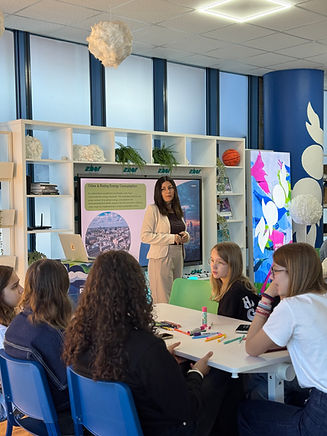
As part of the YLGET – Youth Leading Green Energy Transition project, Asociatia Edulifelong organized the international workshop “My City, My Energy” at Zbor Hub Târgu Jiu, bringing together 26 young participants from Romania and France.
Facilitated by Iohana Udrescu, the workshop invited young people to step into the role of decision-makers and explore the challenges and opportunities of the green energy transition through an interactive simulation carried out entirely in English.
Working in mixed international teams, participants received different city scenarios and were challenged to design sustainable energy solutions adapted to local needs and realities. Throughout the activity, they analyzed environmental and social impacts, debated alternative approaches, and developed their own visions for the future of sustainable cities.

The workshop encouraged participants to think critically about topics such as renewable energy, urban sustainability, climate action, and citizen participation. At the same time, it strengthened key competences including teamwork, communication, creativity, problem-solving, and intercultural collaboration.
By combining environmental education with international exchange and active participation, the activity offered young people a practical opportunity to explore how local communities can contribute to the green energy transition and how youth can play an active role in shaping more sustainable and resilient cities.
The workshop further supported the objectives of the YLGET project by empowering young people to transform ideas into action and by encouraging them to become active contributors to a greener future.

Through all these activities, the Romanian partner successfully achieved the objectives of Local Activities Phase 2 by empowering young people to move beyond awareness and become active contributors to the green energy transition. Much more than 30 young participants (initially planned) were engaged in interactive workshops, advocacy simulations, climate education activities, creative sustainability initiatives, and digital learning experiences that connected environmental challenges with practical solutions.
An important achievement of this phase was the transformation of ideas into concrete action. Participants not only explored sustainability challenges but also developed proposals for local change, engaged in awareness-raising activities, and inspired their peers through creative and experiential learning approaches. The use of innovative methods, including simulations, Climate Fresk, upcycling activities, virtual reality experiences, and non-formal education techniques, demonstrated how environmental and energy education can be both engaging and impactful.
The activities also contributed to increasing community awareness about sustainable lifestyles and the importance of the green energy transition. Through public events such as Seen Fest, young volunteers became ambassadors of change, sharing knowledge and encouraging wider community participation in sustainability-related discussions and actions.
Local Activities in Bulgaria
In Bulgaria, International Youth and Cultural Centre – Burgas (IYCC) conducted a training session with 9th-grade students from Vocational High School of Mechanical Engineering, Electrotechnics and Electronics – Burgas.
The session, titled “Green Transition – Cases and Solutions”, aimed to strengthen students’ understanding of climate change, renewable energy, and sustainable practices, while encouraging them to reflect on their role in the green transition.


During the activity, participants were introduced to the YLGET project and its objectives, as well as to the project handbook—a practical educational resource developed within the project. The handbook is designed to support young people, youth workers, teachers, and other stakeholders, providing accessible information, best practices, and ideas for interactive learning, workshops, and project-based initiatives related to sustainable energy and climate action.
The training also included an interactive, case-based learning activity, where students explored real-life scenarios related to the green transition. Through group discussions and collaborative exercises, participants identified local challenges and potential solutions, actively engaging in dialogue and presenting their perspectives alongside their teachers.
This activity provided a valuable opportunity for students to develop critical thinking, communication skills, and environmental awareness, while fostering a sense of responsibility and active citizenship.

Advocacy and Public Speaking Training in Burgas
An engaging training session on public speaking, debates, and argumentation was organized at the Youth International Center – Burgas.
The activity was implemented in collaboration with the Youth Ombudsman of Burgas and the Students’ Committee to Burgas Municipality (UKOB), bringing together young people in a dynamic and motivating learning environment.
The training focused on developing essential skills for effective communication and advocacy, including techniques for confident public speaking, building strong arguments, and engaging and influencing an audience. Participants also explored ways to overcome stage fright and express their ideas with clarity and confidence.

In the second part of the session, participants took part in a simulation of a Municipal Council meeting, where they assumed the roles of local decision-makers. The central topic—the green energy transition—encouraged active debate, diverse perspectives, and well-structured arguments.
Through this experiential activity, young people demonstrated their ability to analyze complex issues, formulate informed opinions, and engage in constructive dialogue on topics related to sustainable development at local and regional levels.
This training contributed to strengthening participants’ advocacy, critical thinking, and civic engagement skills, empowering them to take an active role in shaping more sustainable communities.
Their engagement reflects the strong voice and vision that young people bring to the future of the green transition.


Role-Play Debate
The session involved two classes of students and focused on an interactive role-play debate titled “Construction of a Photovoltaic Power Plant in the City of Svetlina”. The activity aimed to deepen participants’ understanding of the green energy transition while strengthening their advocacy, communication, and critical thinking skills.
During the debate, students assumed the roles of various stakeholders, including local authorities, citizens, businesses, and environmental representatives. They were encouraged to analyze the topic from multiple perspectives and to present well-structured arguments in support of their positions.
The activity created a dynamic learning environment in which participants actively engaged in discussion, demonstrated openness to different viewpoints, and developed essential competences such as tolerance, active listening, flexibility, and decision-making.

Through this experiential approach, students explored key aspects of sustainable energy development and gained a deeper understanding of the complexities involved in implementing renewable energy solutions at local level. The debate format also supported the development of informed opinions and civic engagement, empowering young people to participate more actively in discussions related to their communities.
We would like to thank the management and teaching staff of PGMEE Burgas for their collaboration and for providing the opportunity to work with motivated and engaged students. Their involvement reflects the important role of education in fostering youth participation in the green energy transition.

Inspiring Young Voices for a Sustainable Future in Burgas
An inspiring event was recently held at the German Language High School in Burgas on April 17 2026, bringing together young people eager to contribute to a greener and more sustainable future.
The activity was supported by facilitators from the IYCC, who guided participants through an interactive and engaging learning experience focused on sustainability, climate action, and youth participation.
At the beginning of the session, participants were introduced to the previous activities and achievements of the YLGET project, as well as to the main elements of the project’s digital booklet dedicated to promoting a just green energy transition. This provided valuable context and inspired meaningful discussions about the role of young people in shaping a more sustainable society.


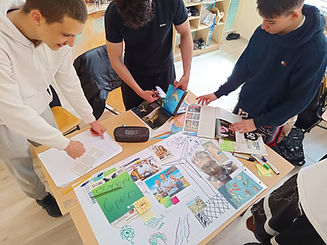
The workshop then encouraged students to creatively express their own visions of the green transition through collages, appliqués, and artistic compositions. Through teamwork, imagination, and enthusiasm, participants illustrated what a sustainable future means to them — cleaner environments, renewable energy solutions, social fairness, and stronger connections between people and nature.
The artworks created during the activity will be featured in an upcoming exhibition that will be presented to relevant stakeholders and members of the community. This exhibition will serve as an important platform for amplifying young people’s voices and perspectives in the ongoing dialogue about the green energy transition.
The event once again highlighted the importance of empowering youth to actively participate in environmental action and decision-making processes, while fostering creativity, collaboration, and civic engagement.


Young People in Burgas Develop Innovative Ideas for the Green Energy Transition
A valuable and inspiring event took place at the International Youth Center Burgas, on April 26 bringing together young participants to develop project proposals focused on the green energy transition and sustainable development.
Students from Secondary School Nikola Vaptsarov Aytos actively participated in the activities, presenting their perspectives and creative ideas for the use of renewable energy sources such as solar and wind energy.
The event encouraged young people to think critically about environmental challenges and explore innovative solutions for a more sustainable future.
The workshop activities were structured around three main themes:
-
Our Common Future
-
Energy Transition
-
Renewable Energy Sources
Working within these thematic areas, participants collaborated in teams to design forward-thinking project ideas that addressed current environmental issues while promoting sustainability, social responsibility, and community engagement. Their work demonstrated not only creativity and innovation, but also a strong commitment to becoming active contributors to Europe’s green transition.
The project proposals were presented through visually engaging and artistic formats highlighting both the imagination and dedication of the young participants. Through their ideas, students showcased their vision for cleaner energy systems, environmentally responsible communities, and a greener future for all.
The projects developed during the event will soon be featured in a public exhibition presented to relevant stakeholders and community representatives. The exhibition aims to encourage dialogue, raise awareness about sustainable practices, and support youth-led initiatives connected to the green energy transition.


Innovation and Sustainability Celebrated at Technical High School – Burgas
An event dedicated to innovation, technology, and sustainable development recently took place at the Technical High School - Burgas., on April 27 2026.
The event marked the official opening of a brand-new STEM laboratory, designed to support practical learning and inspire students to engage with the technologies of the future. The new educational space includes three modern classrooms dedicated to: Green Technologies, Robotics and Sustainable Agriculture.
Representatives from the International Youth Center – Burgas participated as special guests and contributed to the programme by delivering an interactive training session entitled “From Idea to Project” . The workshop focused on renewable energy solutions and encouraged students to transform creative ideas into concrete project proposals related to sustainability and community development.


One of the most remarkable outcomes of the event was the winning student project, which proposed the construction of a photovoltaic power plant funded through a charity campaign. The initiative aims to raise funds for installing a photovoltaic system in a village without access to electricity, demonstrating how youth-led ideas can create meaningful social and environmental impact.
Through this proposal, the students successfully reflected the campaign motto: “Small Steps Towards Sustainable Development” , proving that innovative thinking and community engagement can contribute to building a better and more sustainable future.
At the end of the event, the team from the International Youth Center explored a series of impressive student-created prototypes, which showcased the participants’ creativity, technical skills, and strong commitment to sustainability and innovation.
The event highlighted the importance of STEM education in empowering young people to become active contributors to the green transition and future sustainable development initiatives.
Through all these activities, the Bulgarian partner successfully fulfilled the objectives of Local Activities Phase 2 by empowering young people to become active participants in the green energy transition and sustainability efforts within their communities. The activities engaged a diverse group of students from different schools and educational backgrounds, providing them with opportunities to explore renewable energy, climate action, sustainable development, and civic participation through interactive and experiential learning methods.
An important outcome was the promotion of youth-led innovation and entrepreneurship. Participants developed project proposals addressing renewable energy, sustainable communities, and environmental responsibility, demonstrating creativity, initiative, and a strong commitment to contributing to a greener future. Several of these ideas will continue to be promoted through public exhibitions and community events, ensuring that young people’s voices remain visible and influential beyond the duration of the project.
The activities further contributed to raising awareness among schools, teachers, local institutions, and community members about the importance of sustainable energy and climate action. Strong cooperation was established with educational institutions, youth organizations, local authorities, and youth representative bodies, creating valuable opportunities for dialogue, collaboration, and future initiatives.
Local Activities in Türkiye
In Türkiye, a first local engagement activity was organized, by Sayeg-Der bringing together 62 young students for an introductory session on the project and its objectives.
During the session, participants were introduced to the YLGET initiative and the digital handbook developed within the project. The activity provided an opportunity to raise awareness about sustainable energy, climate change, and the role of young people in the green transition, while encouraging active participation and dialogue.


The high level of interest, curiosity, and motivation demonstrated by the students reaffirmed the importance of youth engagement as a key driver of sustainable transformation.
This activity also marked the transition toward Activity A8: Local Activities (Phase 2), which focuses on moving from knowledge acquisition to active youth involvement and leadership.
As part of this phase, a group of 20 volunteer students will be selected to participate in transnational virtual meetings and webinars alongside peers from Romania and Bulgaria.
From Awareness to Action
Following the introductory local activity, SAYEG-DER continued the implementation of Activity A8 by engaging young people in a series of practical workshops and non-formal learning activities aimed at transforming knowledge into action.
Building on the interest generated during the initial session, participants explored the educational activities included in the YLGET Digital Booklet and tested a range of interactive methods that can be used to promote sustainability and renewable energy among young people.
Students participated in workshops focused on understanding different energy sources and their environmental impact.


The Sustainability Bingo activity encouraged participants to reflect on their own habits and identify practical ways to adopt more sustainable lifestyles.
The programme also included a structured Green Energy Debate, where students examined different perspectives on the transition to renewable energy and developed skills in critical thinking, public speaking, teamwork, and evidence-based argumentation. Throughout the activities, participants used methods from the YLGET Digital Booklet, gaining practical experience with non-formal learning tools that can be replicated in schools and youth settings.


Green Future Challenge Workshop
A major milestone of the second phase was the Green Future Challenge Workshop, organised on 9 April 2026 at Vehbi Koç Vakfı Gastronomy Vocational and Technical School in Istanbul. The workshop brought together Turkish students, youth workers, and a group of 12 visiting teachers from Portugal.
The event began with an introduction to the YLGET project and its objectives, followed by interactive team-building activities that encouraged intercultural dialogue and collaboration. Participants worked in mixed teams and took part in parallel learning sessions combining sustainability, digital creativity, and cultural heritage.
One group explored sustainable food traditions through a practical workshop dedicated to the preparation of Sarma, highlighting how traditional practices can contribute to responsible consumption and reduced waste.
Other groups used Canva to create educational digital games focused on renewable energy, sustainable cities, and climate-friendly lifestyles.
The workshop concluded with a Green Future Tournament, during which participants tested the games developed by their peers and exchanged feedback using participatory evaluation methods. The activity demonstrated how digital tools, creativity, and teamwork can be used to promote sustainability education in an engaging way.
Participants moved beyond awareness raising and developed practical competences related to sustainability, communication, leadership, and youth participation.


The activities strengthened their confidence to act as multipliers within their schools and local communities and reinforced the project's objective of empowering young people to become active contributors to the green energy transition.