%20(2).png)


Local Activities
Our Local Activities aim to inspire and empower at least 30 youths from each partner country to become advocates for sustainable energy. Through a combination of hands-on learning, interactive workshops, and community engagement, participants will explore the importance of renewable energy and energy efficiency while gaining practical insights into sustainable practices.
Local Activities in Romania
In Romania, the local activities implemented under Activity A5 of the Youth Leading Green Energy Transition (YLGET) project offered young people a rich and engaging learning experience focused on renewable energy, climate awareness and active citizenship. Designed to combine creativity, digital tools and experiential learning, the activities helped students understand the green transition through accessible, meaningful and inspiring methods.


One of the key initiatives took place during the “TRECEM pe verde” Festival, where Asociația Edulifelong organised the workshop “Comic Book – The Story of Renewable Energy.” Instead of traditional presentations, the activity used the power of storytelling to help young people explore concepts such as solar, wind and hydropower. Participants created their own illustrated characters and short comic stories, imagining a world where energy is clean, accessible and environmentally friendly. Through drawing and narrative techniques, the youth connected emotionally with sustainability topics and discovered that they can become “heroes of change” in their own communities. The workshop succeeded in making the complex subject of energy transition easier to understand while encouraging imagination, teamwork and communication.

Another experience offered to participants during the festival involved the use of Oculus VR goggles and the application “Energy Encyclopedia VR.” Through immersive 3D environments, young people explored how green energy is produced and distributed, learned about the functioning of photovoltaic panels, wind turbines and hydro installations, and understood how energy efficiency contributes to climate protection. This interactive approach made scientific concepts more tangible and increased motivation to learn about renewable technologies.


A separate activity carried out on another occasion involved a structured debate dedicated to the green energy transition. Using tablets for research and documentation, young people examined real data, scientific studies and news articles in order to prepare their positions. They were divided into three thematic teams—supporters of rapid renewable transition, defenders of traditional energy sectors, and a moderate group advocating for mixed approaches. The debate allowed participants to analyse the economic, social and environmental implications of energy choices, while practising critical thinking, public speaking and respectful dialogue. It also demonstrated how decision-making in the energy field is complex and requires balanced, evidence-based reasoning.
Through all these activities, the Romanian component of A5 provided a dynamic learning environment where young people discovered how creativity, digital tools and civic engagement can contribute to a more sustainable future. The combination of artistic expression, virtual reality, robotics and debate helped participants gain a deeper understanding of renewable energy and climate challenges, while strengthening essential competences such as problem-solving, collaboration and communication. Teachers, parents and community members expressed high appreciation for the innovative nature of the activities, recognising their value in preparing the next generation for the environmental and technological transformations ahead.
Local Activities in Bulgaria
In Bulgaria, the local activities carried out under Activity A5 of the YLGET project offered young people an inspiring and practice-oriented introduction to renewable energy, sustainability and green technologies. Hosted by the International Youth and Cultural Centre – Burgas (IYCC), the two-day STEM event “Youth Leading Green Energy Transition” marked an important milestone in empowering youth with the knowledge, skills and motivation to actively contribute to the green transformation of their communities.


The event brought together young people, teachers and youth workers from Burgas for an interactive programme combining hands-on demonstrations, outdoor activities, creative workshops and structured reflection. From the beginning, participants were encouraged to explore how renewable energy systems work in real life and to consider the challenges of producing, storing and using clean energy. Outdoor demonstrations and practical sessions allowed students to see solar technologies and energy storage models in action, offering them a tangible understanding of scientific principles that are often difficult to grasp in traditional classroom settings.

Throughout the two days, the programme balanced technical learning with activities that stimulated critical thinking and teamwork. Workshops invited participants to analyse sustainability case studies, propose solutions to local energy challenges and engage in debates that mirrored real policy discussions. These debates helped young people understand the complexity of the energy transition and develop communication, negotiation and problem-solving skills essential for responsible citizenship. Simulations further encouraged them to consider diverse viewpoints and collaboratively design strategies for a more sustainable energy landscape.

A particularly motivating element of the event was the creative lab, where participants envisioned their own sustainable future through models, prototypes and small-scale engineering projects. Many students showcased their existing creations—such as robots, solar-powered devices and even an electric car built by local youth—demonstrating impressive innovation and enthusiasm. Presenting these projects to peers and educators strengthened their public speaking abilities and gave them a sense of pride and achievement.


Feedback from the participants was overwhelmingly positive. Many youth highlighted the uniqueness of the event, noting that it gave them the opportunity to experiment with technologies, express their ideas freely and engage in non-formal education methods for the first time. Teachers and youth workers appreciated the event’s modern educational approach and expressed interest in integrating similar activities into their regular school or community programmes.
The success of the Bulgarian local activities reflects IYCC’s commitment to empowering young people and strengthening environmental literacy in the region. By combining STEM education with creativity, civic dialogue and experiential learning, the activities helped youth gain a deeper understanding of renewable energy while also developing essential competencies that will support their future engagement in sustainability initiatives.
Local Activities in Türkiye
In Türkiye, the implementation of Activity A5 has begun with the organisation of an interactive workshop led by SAYEGDER at Mürüvvet Evyap Schools. Although the full cycle of local activities is still underway, the first completed session already demonstrates the strong potential of the Turkish component to engage young people in meaningful reflection on sustainability, community values and responsible decision-making.

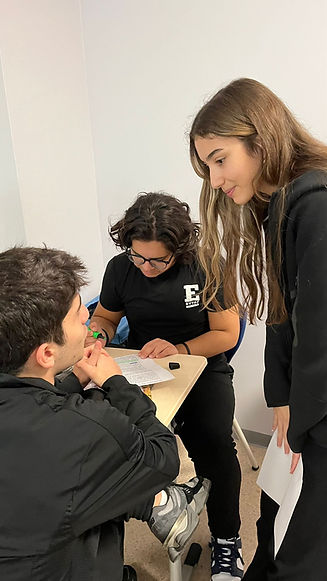

The workshop invited students to participate in a dynamic simulation that explored how a new society might be built under extraordinary circumstances. In this scenario, a group of people is isolated on a desert island for the next fifty years and must establish a sustainable and inclusive community. Students were asked to select eight individuals from a diverse list of twenty candidate profiles, each representing different professions, backgrounds, skills and vulnerabilities. Guided by SAYEGDER youth workers, participants examined the ethical, social and environmental implications of their choices, carefully considering aspects of fairness, diversity, ecological responsibility and long-term sustainability.

The From Peel to Power activity was successfully implemented with preparatory class students from Vehbi Koç Vakfı Gastronomy Vocational and Technical High School within the framework of the YLGET project during the first week of January, the Energy Week . The workshop introduced students to the Zero Waste (Sıfır Atık) concept through a gastronomy-focused, youth-friendly approach aligned with green transition values.
Following the activity steps, students explored how organic kitchen waste can be transformed into energy and resources, with a specific focus on biomethanization practices used by İstanbul İSTAÇ.
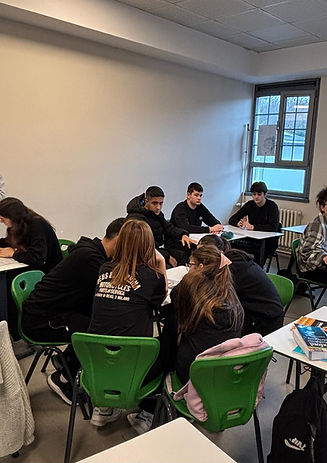
Through guided discussions and practical examples, learners understood how food waste contributes to biogas production and composting, linking everyday kitchen practices to climate action and renewable energy.
The session also included comparative perspectives, where students were introduced to good practices from other countries, such as Romania and Bulgaria, highlighting how different European contexts address food waste and circular economy solutions. This strengthened students’ understanding of the European dimension of sustainability and green skills, in line with YLGET objectives.


As the Turkish activities progressed, they contributed not only to the personal development of participating youth but also to the wider goal of fostering informed, responsible and proactive young citizens who are ready to take part in shaping a sustainable future.